Dear Je,
Hope you are doing well. I recently came across a thought-provoking idea articulated by Ajithan. It resonated deeply with me, and I felt compelled to reflect on it. II’m sharing below the insights I subsequently posted in the Vishnupuram USA Literature Group.
Beyond Moral Theory: Ajithan on Literature, Empathy, and Ethical Life:
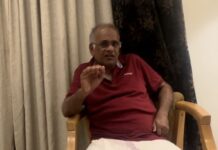
Highly recommended to watch this video. Ajithan steps in and reverses the usual hierarchy between philosophy and literature. He does not treat literature as a mere reflection of moral theory or a handbook of ethical rules, but as an active mode of knowing and living one that often precedes philosophy, moves alongside it, and at times surpasses its reach. For him, aram is not a static code to be memorized, but a deep moral orientation shaped by history, culture, and lived experience, revealed most fully through stories. Where philosophy seeks clarity and universal principles, literature enters the friction of life itself, tracing how values collide and reconfigure under pressure. Moral life, in this view, is not the triumph of a single virtue but the uneasy coexistence of many courage, patience, survival, loyalty each emerging unevenly, without guarantee or hierarchy.
What gives literature its distinctive ethical power is empathy. Not pity, not judgment, but the imaginative act of inhabiting another’s inner world. Through this, ethics becomes attentive rather than prescriptive, a matter of perception rather than rule-following.
Ajithan illustrates this across disparate domains, the layered moral agency of characters in One Piece, the irreducible diversity of human responses in Shoah (Holocaust Documentary) and even prehistoric stone tools that reveal an ancient fusion of utility, symbolism, and meaning. Moral understanding, like a river shaping its banks, forms slowly and without final closure. Drawing on thinkers such as Iris Murdoch, Bernard Williams, and David Hume, Ajithan argues that ethics is interpretive, culturally embedded, and permanently unfinished.
He goes further still. Literature does not merely depict moral complexity. It trains moral perception itself. Our capacity to recognize ethical dilemmas is shaped by the stories we inherit and the narrative worlds we enter. Ethics, then, is not the achievement of an isolated moral hero, but a relational process involving memory, culture, emotion, and circumstance. What ultimately matters is not just success or failure, but attentiveness, struggle, and fidelity amid uncertainty. Literature’s refusal to resolve ambiguity is thus not a flaw but an ethical discipline, teaching endurance in a world where inherited moral certainties can no longer keep pace with lived reality.
Literature thus becomes not a supplement to ethical reasoning, but one of the primary sites where humanity rehearses how to live without guarantees.
Most Highlight of speech which I admire:
1. Empathy, unlike sympathy, is not a distant emotional response but an immersive act of understanding that draws one into another’s interior world; literature cultivates this capacity by situating readers within diverse, lived human experiences rather than observing them from the outside.
2.Literature offers a morally textured mode of understanding that exceeds philosophical abstraction, shaping moral consciousness through narrative depth, emotional engagement, and sustained attention to the ambiguities of lived experience.
Thanks,
Vivek