The Daughtet of Kumari Amazon
The Daughter of Kumari is, above all, an emotional novel. It should not be approached as a historical novel or even as historical fiction in the conventional sense. Those who read it expecting a reconstruction of the past, historical arguments, or factual interpretations may entirely miss its essence. History is only the landscape upon which the novel unfolds. Its true subject is the human heart.
The novel does not seek to present a historical thesis. Instead, it offers a profoundly human vision through emotion, memory, longing, sacrifice, and love. The characters happen to inhabit a world shaped by mythology, temples, kings, and ancient traditions, but their inner struggles are timeless. Their fears, hopes, conflicts, and aspirations belong to every age. One does not need to possess any knowledge of history, mythology, or temple culture to be moved by this work. Anyone who has experienced love, loss, faith, or compassion can enter its world.
As I read the novel, I found myself repeatedly overwhelmed with emotion. There were many moments when I read with tears filling my eyes. It is rare for a work to evoke such a response, not by manipulating sentiment, but by revealing the quiet dignity and vulnerability that exist within every human being.
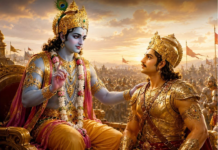
One of the novel’s greatest achievements is the way it dissolves the boundary between the divine and the human. It is a story of human beings appearing in the form of gods, and gods appearing in the form of human beings. The divine is not portrayed as distant, omnipotent, and inaccessible; rather, it reveals itself through human compassion, suffering, courage, and love. Likewise, ordinary human lives acquire a sacred dimension. This continuous movement between humanity and divinity creates an experience that is at once mystical and deeply intimate.
Reading the novel also reminded me how much my experience has been enriched by the Temple Art Appreciation classes. Before attending those classes, I would probably have appreciated only the emotional surface of the narrative. But the classes opened an entirely new way of seeing. They introduced me to the symbolic language of temples, sculpture, iconography, and sacred space. Because of that preparation, many layers of meaning that would otherwise have remained invisible became accessible.
For that, I owe my sincere gratitude to Jayakumar. He gave me the first orientation to this vast mystical and artistic universe. He did not merely teach facts about temples; he trained my eyes to see, my mind to recognize symbols, and my heart to respond to the aesthetic and spiritual dimensions hidden within them. That initial guidance has made it much easier for me to navigate this extraordinary artistic experience.
I now realize that appreciating such a novel requires not merely reading but seeing. The Temple Art Appreciation classes have given me that vision. They transformed temples from places of worship into living texts, sculptures into philosophy, and mythology into expressions of universal human experience. The Daughter of Kumari became, for me, a continuation of that journey—a journey where art, spirituality, and humanity merge into a single emotional experience.
Ram Sundar