Dear Jeyamohan,
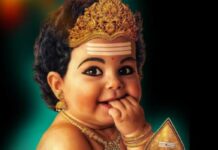
Seeing the widespread debate surrounding the idea of “Murugan as the Tamil God,” I had been thinking that I should ask for your perspective on the subject. Your recent, detailed talk addressed precisely that need. It provided thoughtful and well-reasoned answers to many of the confusions, misconceptions, and emotionally charged arguments that have come to dominate this discussion.
What I found particularly valuable was the way you explained, from both historical and cultural perspectives, that not only Murugan but no deity can be confined exclusively to a single language, ethnicity, or geographical region. A community may sincerely feel that a particular deity belongs especially to its own cultural tradition, and it has every right to cherish such a belief. Faith is deeply personal, and emotional identification with a deity is an entirely legitimate part of religious life.
However, the problem begins when such a belief is transformed into an exclusive political claim and imposed upon everyone else. No one has the right to threaten, intimidate, or silence those who hold a different historical or cultural understanding. Nor can violence, or even the justification of violence, ever be accepted in a civilized society or a democratic nation simply because someone expresses an alternative view.
To take a simple example, a person may genuinely believe that Shiva was born in his own village. That is his personal belief, and he is perfectly entitled to hold it. But if another person says, “No, I believe Shiva originated elsewhere,” and the response is, “I will beat him,” or “He should not be allowed to speak,” that is no longer a disagreement of opinion. It is a threat of violence, and it is something that deserves legal intervention. Unfortunately, in our present political culture, such language of intimidation is often normalized and even celebrated as a legitimate political weapon. That is deeply disturbing.
What is even more regrettable is that a question deserving serious historical and cultural inquiry is being reduced to a crude conflict of religious identity politics. In such an atmosphere, genuine historical research becomes nearly impossible, and healthy intellectual exchange gives way to emotional mobilization and political opportunism. Instead of encouraging people to understand the evolution of traditions and cultures, these controversies merely inflame passions and deepen divisions.
In this context, your talk stood apart because it rose above partisan emotions and presented a balanced picture by bringing together history, culture, civilization, and democratic values. Rather than reinforcing existing prejudices, it encouraged people to think more carefully about the nature of religious traditions, the complexity of cultural history, and the importance of protecting the freedom to discuss these subjects without fear or intimidation.
For many listeners, I believe your talk helped dispel long-standing misconceptions and offered much-needed clarity at a time when public discourse is increasingly driven by slogans rather than thoughtful inquiry.
Please accept my heartfelt thanks for making such an important and timely contribution to this discussion.
With warm regards,
Jawahar Raj