I have an ideal way to evaluate any movement: judge its merits through the individuals it created and assess its demerits through the institutions it developed.
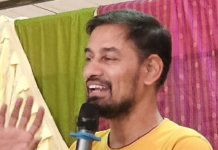
My father-in-law Mr. S. Sargunam is the creation of the self-respect moment of E.V. Ramasamy, aka Periyar. The first thing he did in his life was denounce his surname, Pillai, referring to a caste. He belongs to a lower middle-class family; he created himself through education and became a teacher. He was an atheist throughout his life and an ardent follower of Periyar.
He is a classic example of a miser, never spending money for any luxury, even for his own medical treatments, because throughout his life he saved money to arrange marriages for his younger sisters and his wives’ younger sisters. He arranged nine marriages in his career as a teacher. But he is very keen on his dressing and insists on fine dressing for others. He thinks dress is the expression of self-respect. If a person was not well dressed, he used to scold him. “Don’t you have self-respect?” he used to ask.
He is extremely fond of education; it is a kind of obsession for him. He used to spend money on education not only for his children but also for others. At his old age he donated almost all of his savings, that is, millions, to government schools. But he can’t tolerate someone spending money for a temple. Once he saw a woman buying a coconut worth Rs 10 for a temple and got furious. I told him that the woman can use the whole coconut for cooking later, and it somewhat comforted him.
My father-in-law is one of the millions created by the self-respect movement. Through his faith and anguish, we can understand the sociopolitical realities behind that movement, particularly in the Tanjore district of Tamil Nadu. A hundred years ago, a common man wearing a white cloth on any occasion, including his marriage, was considered a revolt against upper-class landowners. The entire agricultural land of Tanjore belongs to a few big landlords. Temples and Mutts own a significant portion of the lands. The obsession of my father-in-law with decent dress emerged from this reality.
A Gen Z person can understand various rituals and habits of today’s political stages through this background reality. A hundred years ago, an ordinary person should have been naked on the upper parts of his body while appearing before a landlord or an upper-class man. He should hide his upper cloth behind his body or tie it on his waist while seeing a landlord. The highest honor given by a head of a mutt or landlord to another one is giving an upper cloth to him.
This is why, even today, we present ornamental upper cloths known as Ponnadai to guests at nearly all public meetings. In contemporary times, this practice has become a lengthy, ceremonial, and somewhat hollow ritual; these decorative shawls are often reused in a cycle, with most attendees having been shawled by someone else. However, in the past, this act symbolized a rebellion against dominance and a declaration of self-respect. Consider, seventy-five years ago, when a village barber was honored with a golden upper cloth by C.N. Annadurai—what did this gesture signify?
That generation involved in self-respect movement was obsessed with monitoring every religious and traditional ritual, questioning whether it was against the self-respect of the common man. My father-in-law even opposed when his daughter and I bowed before him to receive blessings on our wedding day.
The obsession with words is also the result of a self-respect movement, particularly rhetoric and ornamental words. At the recent wedding of my son, my father-in-law, his grandfather, was very keen on writing and reciting some poetry on the stage. The lines of those poems featured high-sounding rhetoric, which elicited derisive smiles from the younger audience. I told them the historical background of those lines; they described the bride and bridegroom as prince and princess, and once it was a direct claim of self-respect. Any type of protest will naturally be expressed loudly, and every act of revolt gradually becomes a simple ritual.
The self-respect movement was a sociocultural initiative that had no clear socio-economic policies. As a result, it evolved into a populist movement and ultimately transformed into a political party. This transition highlighted its flaws and failures, which are evident in contemporary Dravidian politics. The shift from the self-respect movement to the Dravidian political movement represents a significant move towards populism and pragmatic caste-based politics, leading to a gradual decline in its idealism and commitment to social causes.
Without moving toward populism, a social movement cannot transform itself into a political party. Populism means compromising with the ideas and beliefs of common people. Generally, populist movements adapt ideas from other cultural and social movements that have already gained popularity. The Dravidian movement adapted its ideas from two sources. One is the early Dalit movement of Tamil Nadu. Its pioneers were Pandit Ayothee Das, Rettaimalai Srinivasan, and M.C. Raja. It had already gained momentum and was a formidable political force in the erstwhile Madras presidency. When the Dalit movement was absorbed by the Dravidian movement, the early Dalit leaders were forgotten, and they were remembered after nearly one century when the second Dalit political movement emerged in connection with Ambedkar’s birth centenary in 1991. Then only their works and thoughts resurfaced.
The Dravidian movement absorbed a second movement, the Tamil renaissance. The Tamil renaissance is purely a cultural movement consisting of three different streams. The ‘Tamil publishing’ movement aimed to revive and publish ancient Tamil texts, the ‘Pure Tamil’ movement aimed to purify Tamil by eliminating words from other languages, and the ‘Tamil music’ movement aimed to revive old Tamil music traditions. The Tamil renaissance movement had already completed its major victories and gained mass support among Tamil people before Indian independence.
The self-respect movement adopted the idea of Dravidian ideology on its way to populism. Dravidianism may sound like racism, but in fact was never a racist idea; it was just a fantasy that never connected with any real social identities. In fact, the idea of Dravidian identity was adopted from the writings of Pandit Ayothee Das, who adopted it from the linguistic research of Bishop Robert Caldwell. As one of the pioneers of the Indian Dalit movement, Ayothee Das used the concept of Dravidian identity to challenge the claims made by Europeans and Brahmins that they were Aryans and superior in racial terms. He presented Dalits as “early Dravidians,” possessing greater racial purity and supremacy.
The self-respect movement faced a challenge at its growing pace; earlier, the first caste-based census in India in 1881 united similar-natured second- and third-level castes, and large caste groups were formed. While the British introduced elections for civil bodies in 1920, these compound caste groups began to play big roles in power politics. Every party needed an ideology to unite all castes under their flag. The Indian National Congress used nationalist ideals, and the Communist Party of India used international ideals for that. The self-respect movement developed Dravidian ideology for that purpose, because they also wanted to unite the Telugu-speaking masses of the erstwhile Madras presidency under them. Even today the Telugu people, who consist of a considerable percentage of the population, are the base of Dravidian political parties, particularly the Dravida Munnetra Kazhagam.
After independence, the Dravidian movement began to shift its ideology towards Tamil linguistic politics and Tamil nationalism, coinciding with the start of the struggle for language-based states in India. They interpreted that Dravidian politics is actually Tamil politics. This silent shift became strong through the agitations against the imposing of Hindi as a common national language. C.N. Annadurai carried over this shift, while EVR opposed and ridiculed the anti-Hindi agitation. EVR dismissed the entire Tamil heritage, including Thirukural, labeling them as ‘shit-stained wool; you can only abandon them, you can’t wash it.’
The Dravidian movement adopted almost every idea of the Tamil renaissance movement and turned itself into a populist Tamil political movement. The early proponents of the Tamil renaissance movement migrated into the Dravidian movement and strengthened it as a political force. These adaptations made DMK a champion of Tamil language protection. But a populist movement can only generate superfluous momentum, not radical changes. The major achievements of the Tamil renaissance were already done by Tamil scholars in the Congress period, like the first Tamil encyclopedia (Periyasamy Thooran) and the first Tamil lexicon (S. Vaiyapuri Pillai).
Personally, I feel every movement is ultimately a failure because it starts with idealism and succumbs to practicality. One should meticulously study the failures of a movement, as they serve as the seed for the next one. After one century, we can assess the failures of the self-respect movement, mainly in two areas. One is economical, and another one is cultural.
The self-respect movement was against big landlords—they belong to few upper classes. Brahmins, second-level castes such as Mudaliyar, Naidus, and Velalas, and even third-level castes like Moopanars make up this group. But the Dravidian movement opposed only the Brahmins, and the second and third castes migrated into the Dravidian politics when it gained momentum. Thus, it emerged as a champion of the interests of middle castes, i.e., the OBC. In fact, the OBC uses the rhetoric of Dravidian and Tamil politics as an ideological cover.
Naturally the OBC politics are against the Dalits, and the Dalit politics arose in Tamil Nadu from this ground reality. The OBC-Dalit confrontation continues in rural Tamil Nadu, and it remains a major social and cultural problem that Dravidian politics do not address. Though the DMK is officially against it, a set of Dravidian intellectuals (M.S.S. Pandian, Rajan Kurai, and Jeyaranjan) created the theory that Dalit youth were waging a kind of “love jihad” against OBC communities and stealing their women. This theory has gained tremendous momentum today and is causing continued honor killings throughout the state. (Work, Caste, and Competing Masculinities: Notes from a Tamil Village)
The political parties that emerged from the self-respect movement are essentially champions of capitalism, and they protect the rights of both large and small capitalists. They have perfect synchronization with Indian and global capitalism. So they never did anything “revolutionary” for the poor, as they boasted when they were gaining momentum toward power. In fact, C. Rajagopalachari, the Congress chief minister, imposed the Land Ceiling Act, breaking the hegemony of landlords in Tamil Nadu
We can compare the self-respect movement with that of Sri Narayana Guru in Kerala. The Narayana movement was purely a spiritual, intellectual, and social one. Despite numerous attempts over the past century, it never transformed into a populist or political movement. Therefore, it never adapted ideas from outside. It never longed for any kind of ‘purity in tradition’; instead, it was open to every idea from east and west. On the other hand, the Dravidian movement mocked and disregarded the fundamental spiritual essence of Tamil culture, attempting to transform into a purely rational movement. This nature alienated it from the original creativity, and almost every writer or poet from that movement was a simple propagandist and revivalist. Conversely, the Narayana movement fostered a surge of intellectuals, artists, and writers.
Later, the Dravidian movement discovered this void, and C.N. Annadurai adapted Thirumular and Thiruvalluvar to his ideology. Today, the Dravidian movement is attempting to incorporate Lord Murugan (Subrahmanyan) and Ramalinga Vallalar into its ideology, because the majority of Tamil Nadu’s population is spiritually distancing itself from Dravidian politics, despite voting for these parties based on caste affiliations. The Hindutva forces are trying to exploit that spiritual deviation of the Tamil masses, and the DMK is alert to it. But its ideological base is not transforming easily toward this reality.
The Dravidian parties are simple capitalist political parties, and no sane person can entertain any other illusion about them. On the economical side, they have no difference of ideology with the Bharathiya Janatha party. But I think a regional party is far better than any national political party because it is directly liable to the people here. On the other hand, the leader of a national party will be curious to please his high command instead of the people who voted for him. The economic growth of Tamil Nadu was started by the rule of K. Kamaraj, but the two Dravidian parties did a lot to take that momentum forward. Particularly the industrial policies of M. M.Karunanidhi and the education reforms of M. G. Ramachandran benefited the state very much.
I think the historic role of the self-respect movement is still relevant, and it has a duty to stand against the Hindu radicalism emerging strongly in the state. However, it cannot align itself with Dravidian racism or Tamil fanaticism as a means to achieve its goals. It should develop a new progressive ideology from its roots to adapt the Tamil spiritual and cultural tradition with modern democratic values and go forward.