Mr. V. Amalan Stanley conducted introductory sessions on Buddhist meditation, specifically Vipassana, on three separate occasions. Only those who participated in these initial sessions are eligible to attend the subsequent, advanced level of Vipassana training. This is a five-day training program. It is scheduled to take place on June 12, 13, 14, 15, and 16.
Today, training programs categorized as “Vipassana practice” are being conducted widely. Many people also mention having participated in them. However, there are certain essential points one needs to understand regarding Vipassana.
Vipassana practice should not be undertaken without the direct guidance of a qualified teacher. It is the teacher who must determine whether or not you are suitable to practice Vipassana. The teacher must observe and monitor you while you engage in Vipassana. Furthermore, the teacher must address and clarify any difficulties or confusions that may arise for you during the process.
Within the Indian tradition, Vipassana belongs to two distinct lineages: Vedanta and Buddhism. Neither of these traditions is centered on the worship of a deity; therefore, one should not confuse this practice with religious worship.
What is the objective of Vipassana training? What is its benefit?
This issue can be raised as a natural and fundamental question: Why is it that we are unable to simply be—to sit idly without doing anything—even for a mere ten minutes? Why, during such moments, do we invariably observe ourselves looking at something on our mobile phones? Why do we pass the time by reading magazines, conversing with the person next to us, or engaging in some activity or another? The reason is that we are unable to confront our thoughts directly. We lack the ability to manage or handle our minds. The mind wanders uncontrollably; it spins in circles, endlessly and without purpose. Consequently, we engage in various activities merely to distract ourselves from—or hide ourselves from—our minds.
The fundamental question is this: When a person is alone with their mind—that is, when they are simply sitting idle without doing anything—do they feel happy, or do they experience sadness, anxiety, or irritation? Based on this observation alone, one can determine whether a person’s life is truly in order. A person who remains joyful even when completely alone is someone who is truly living life. The natural state of the mind is happiness; Vedanta texts assert that the natural state of the soul is bliss. If one is not happy, it implies that one possesses a distorted mind.
To discern the nature of this distortion, one must spend time in solitude with one’s mind. One must come to know the mind. Subsequently, one must learn how to manage it. Such knowledge alone can serve as the path to true happiness. In reality, if we were to spend some time alone with our minds and observe them closely, we would realize for ourselves that we are constantly being tossed about by meaningless irritation, anxiety, and worry. We would then naturally learn how to handle these states ourselves.
However, spending time alone with one’s inner self is not an easy task. It requires systematic practice and the guidance of a teacher. This is precisely what Amalan Stanley offered in the introductory session. This program represents the next stage of training for those who have completed that initial course. It marks one’s entry into the true practice of Vipassana.
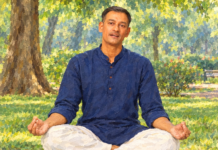
What is the benefit of this practice? In ancient times, it aided monks in attaining a state of spiritual detachment. In the context of modern life, it prevents the mind—which otherwise tends to remain scattered—from drifting, enabling it instead to focus sharply on the task at hand. It purges the mind of meaningless distractions and instills a sense of inner stability. The resulting composure serves to enhance our interpersonal relationships.
June 12 , 13, 14, 15 and 16 (Five days)
தொடர்புக்கு [email protected]